By George Bukenya
Although over 70% of Uganda’s population depends on agriculture, the sector is still grappling with a number of challenges, such as low productivity, post-harvest losses, climate change, and limited market access.
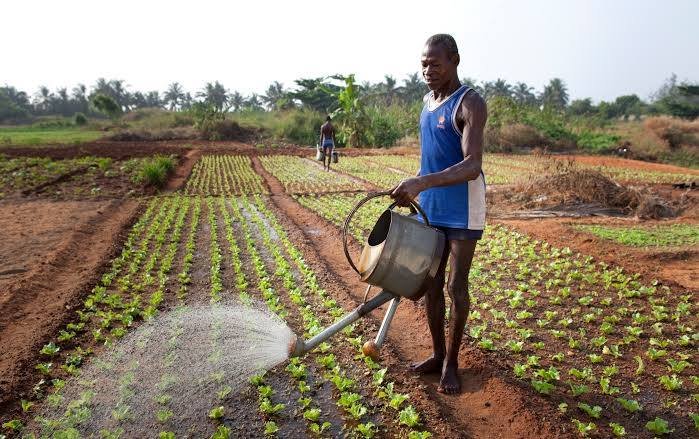
Application of the irrigation farming method for small and medium-scale farms will increase production and stabilize output from the agricultural sector, as well as ensure food security not only in Uganda but also in the East African Community (EAC) region.
According to the Minister of Agriculture, Animal Industry and Fisheries (MAAIF) Frank Tumwebaze, the huge challenge facing the Crop Sub-sector in Uganda isn’t the inadequacy of Siros but the limited use of irrigation by small and medium scale farmers.
While addressing reporters regarding the commemoration of the International World Food Day at Uganda Media Centre in Kampala, the minister said that food production is still low in the country due to the very limited use of modern farming methods like irrigation and application of fertilizers, and this has culminated in malnutrition.
“ Farmers need to embrace irrigation and construction of dams for small and medium scale farmers if we are to realize stable output in the crop sub-sector and in the Agricultural Sector at large,’’ Hon Tumwebaze asserted.
“ Our country is still facing a challenge of malnutrition, with about 25% of children under five being stunted.’’ ‘Better foods’ means a safe, nutritious, and affordable diet, vital for healthy growth, strong immunity, and productivity.’’ He said.
He also said, although the government, through NAADS, has, over time, constructed Siros in almost all districts alongside those constructed by the private individuals and companies, food security is still a challenge in the country.
Although farmers and consumers criticizes the innovations done by scientists in the introduction of new improved varieties of seeds and plants on grounds that there yield is not of good quality yet they are expensive, MAAIF have come out and defended the need to embrace the innovation saying they are ideal because of the changing conditions like pest resistance in the indigenous crops, and for commercial purposes.
The International World Food Day is commemorated annually on 16th October, and this year’s commemoration coincides with the 80th anniversary of the Food and Agriculture Organization. Uganda will hold this year’s celebrations at Rwebitaba Research Institute, Kyembogo Station in Kabalore district.
This year’s theme: ‘’Hand in Hand for Better Foods and a Better Future, and according to Minister Tumwebaze, it is a powerful call for global and national collaboration because it emphasizes that transforming our agrifood systems requires us to work together, across governments, organizations, the private sector, academia, and communities.