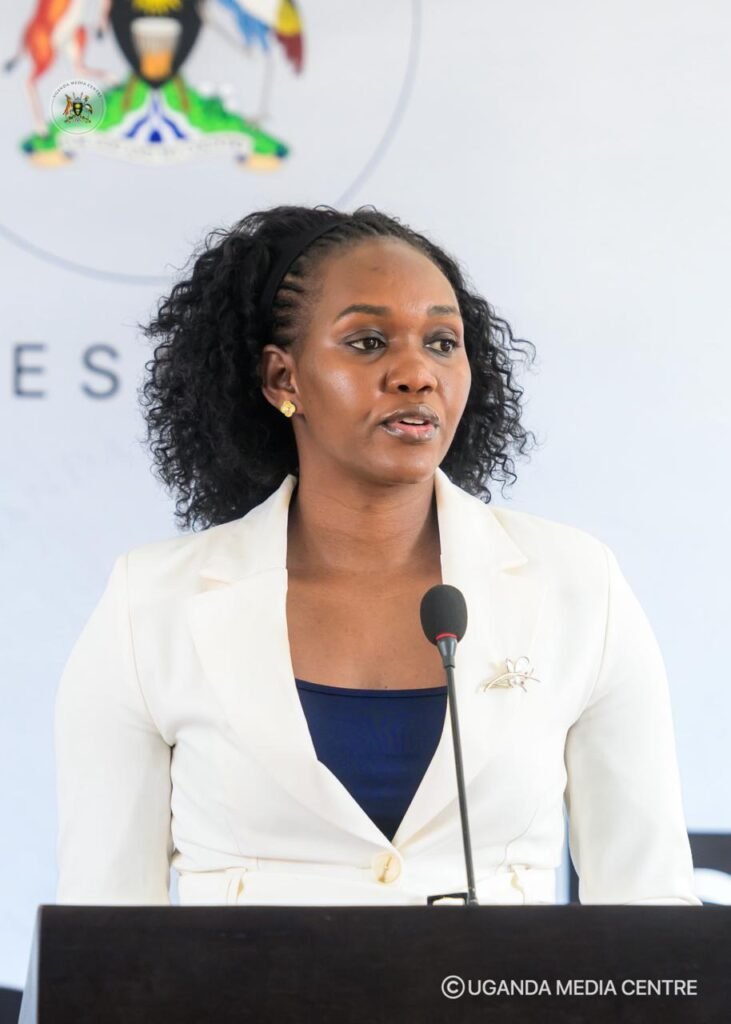
Minister of State for Energy and Mineral Development Phiona Nyamutooro
By George Bukenya
Kampala: Uganda is seeking to attract investment across the mineral value chain as the country prepares to host the 15th Annual Mineral Wealth Conference and Expo from September 29–30, 2026, at Speke Resort Munyonyo in Kampala.
The conference, held under the theme “Beneath the Surface: Unlocking Africa’s Next Mining Powerhouse,” will bring together government officials, investors, mining companies, financial institutions, technology providers, and other industry stakeholders to explore opportunities in Uganda’s mineral sector.
Minister of State for Energy and Mineral Development, Phiona Nyamutoro, said Uganda must move beyond the extraction and export of raw minerals to processing, refining, manufacturing, and other value-addition activities that create jobs and strengthen the country’s economy.
Nyamutoro made the remarks while outlining the government’s priorities on the Mineral Sector ahead of the conference, which will be followed by an Eastern Uganda excursion from October 1–3, 2026, aimed at showcasing the region’s mineral potential and investment opportunities.
According to Nyamutoro, Uganda has more than 58 categories of identified minerals, while high-resolution aeromagnetic surveys have helped map the country’s geological potential and identify areas with opportunities for exploration and investment.
She highlighted rare earth elements, gold, iron ore, phosphates, graphite, cobalt, copper, lithium, Colton, the three Ts (tin, tantalum, and tungsten), limestone, marble, and vermiculite among the country’s strategic mineral opportunities.
These resources support industries such as clean energy, electric vehicle manufacturing, steel production, fertilizer manufacturing, electronics, and construction.
However, the minister said, Uganda’s mineral ambitions must focus on translating geological potential into productive investment, employment, industrial development, and sustainable national wealth.
“Our ambition must go beyond simply knowing what lies beneath our soil. We must translate our mineral potential into productive investment, employment, industrial capacity, value addition, and sustainable national wealth,” Nyamutoro said.
The Minister also called for investment in technology, skills, infrastructure, financing, geological knowledge, and regulatory frameworks to support the development of a competitive and responsible mineral sector.
Nyamutoro also emphasized the need to formalize artisanal and small-scale mining, saying the government’s approach to illegal mining should focus on enabling miners to operate legally, safely, and responsibly rather than simply closing mines.
She explained that formalization would help miners access legitimate markets, appropriate technologies, skills, financing, and other forms of support while improving accountability and traceability in the sector.
She further stressed that responsible mineral development must protect human life, occupational health and safety, the environment, communities, and mineral resources.
The Chairperson of the Governing Council of the Uganda Chamber of Energy and Minerals, Aggrey Ashaba revealed that approximately 150 entities are operating in the energy and minerals sector, and that the conference would provide a platform for strengthening collaboration between government and private-sector players.
“The Chamber’s membership includes mining and petroleum companies, financial institutions, insurance firms, logistics providers, service companies, and other stakeholders across the mineral value chain,’’ Ashaba said
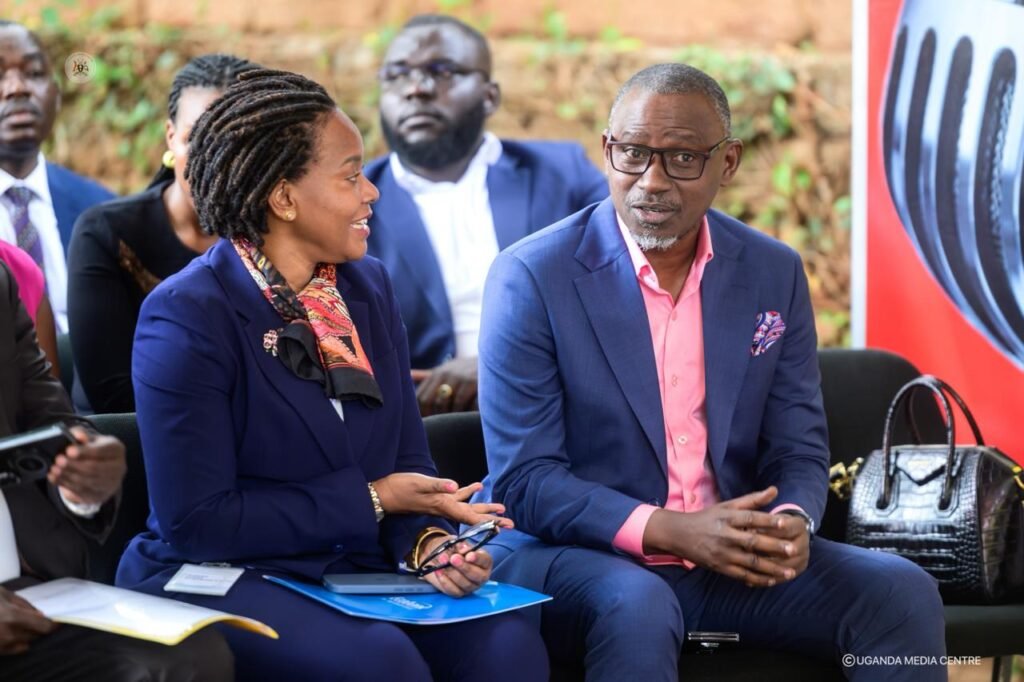
Aggrey Ashaba and Eco Bank MD Grace Muliisa
According to Ashaba, the Chamber’s representative, the organization seeks to bridge the gap between public-sector policymaking and private-sector investment expectations.
He also said the Chamber is focused on four key areas: national content and participation, regulatory predictability, industrialization, and mineral value addition.
“We need appropriate policies and regulations that allow private capital and people participating in the sector to make long-term projections and investment decisions,” he said.
He also emphasized the importance of developing local processing and manufacturing capacity to ensure Uganda benefits more from its mineral resources.
Ecobank, the conference’s lead financial partner, said it is prepared to support investment in Uganda’s mineral sector through financing, trade facilitation, and its Pan-African network.
Speaking at the event, Grace Maliisa, representing the banking sector, said Eco bank’s operations across 32 African countries provide the bank with experience in some of the continent’s major mineral-producing economies, including the Democratic Republic of Congo, Guinea, Ghana, Zimbabwe, and Sierra Leone.
She said mining generates opportunities beyond extraction by creating demand for contractors, transporters, manufacturers, engineers, and technology providers.
“The opportunity, therefore, is not simply to finance mining; it is to finance the ecosystem around mining,” she said.
Maliisa cited Eco bank’s financing of two mining projects in Sierra Leone—Sierra Rutile and Meya Mining—as an example of its support for mineral processing equipment, infrastructure, local employment, and beneficiation.
She said the bank intends to apply lessons from its African operations to Uganda’s mineral sector while adapting its approach to the country’s specific priorities.
Through its Pan-African network and platforms such as the Eco bank Trade Hub, the bank also seeks to connect Ugandan businesses and investors to regional and international markets.
Organizers said the conference will provide opportunities for investors and project developers to engage through a dealers’ room, where they can explore partnerships and identify viable projects.
The investment opportunities will cover: Mineral exploration and mine development, Mineral processing and beneficiation, Refining and manufacturing, mining equipment and technology Infrastructure development and logistics, Supporting services across the mineral value chain.
The Chamber also called for innovative financing models to help mineral projects move from exploration and feasibility stages into production.
Government, meanwhile, said it would continue working to strengthen the investment environment while promoting transparency, responsible exploitation, and greater participation by Ugandans.
The 15th Annual Mineral Wealth Conference and Expo is expected to serve as a platform for discussions on how Uganda can translate its mineral resources into industrial growth and economic transformation.
Organizers said previous editions attracted more than 1,000 delegates annually, with participation from over 52 countries, creating opportunities for investment and business partnerships.
The 2026 edition is intended to strengthen those engagements by connecting mineral potential with investment, production, and value addition. Eco bank said it was committed to supporting Uganda’s ambition to transform mineral wealth into broader economic wealth through responsible investment,