By George Bukenya
KAMPALA – Government has announced Saturday, November 28, 2026, as the date for the fifth National Cleaning Day, warning that able-bodied citizens who fail to participate could face penalties under applicable laws and local bylaws.
Addressing journalists at the Office of the Prime Minister, Prime Minister Robinah Nabbanja said the exercise will run from 7:00am to 10:00am countrywide under the slogan, “A Clean Uganda Is Everybody’s Responsibility.”
During the three-hour exercise, movement of vehicles, motorcycles, bicycles and pedestrians will be restricted, except for exempted categories including garbage collection trucks, ambulances and other medical services, security personnel, foreign tourists, diplomats, health workers and people undertaking scheduled international travel with supporting documents.
Nabbanja said the programme was approved by Cabinet under Minute No. 246 CT 2025, with the last Saturday of every month designated as National Cleaning Day.
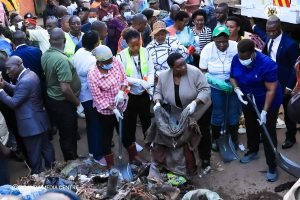
Citizens are expected to clean public spaces including markets, schools, health facilities, roads, places of worship and drainage channels.
She cited Articles 17 and 39 of the Constitution, which outline citizens’ responsibilities to protect the environment and guarantee the right to a clean and healthy environment.
Government says 75 percent of Uganda’s disease burden is preventable through improved sanitation, proper hygiene and responsible environmental management.
Four national cleaning exercises have so far been conducted, with main activities held in Kampala, Kira Municipality in Wakiso District, Hoima City and Lira City on July 25, August 29, September 26 and October 31, 2026, respectively.
Nabbanja said the exercises have improved cleanliness, increased public awareness and community participation, strengthened private-sector involvement, improved waste sorting and recycling, and improved coordination between government institutions and communities.

However, she called for stronger mobilization by leaders at all levels, improved waste disposal practices and adequate provision of garbage collection trucks by urban and local authorities.
She urged Ugandans to stop littering and dumping waste in undesignated areas, while encouraging households and workplaces to embrace waste segregation and recycling.
The main venue for the November 28 exercise will be Kalerwe in Kawempe Division, Kampala, where government officials and other stakeholders are expected to lead the activities.
Other priority areas will include roadsides, streets, public walkways, markets, trading centers, business premises, drainage channels, streams, schools, health facilities, workplaces and green spaces.
Government is also preparing to recognize and reward the best-performing cities, districts, municipalities, town councils, sub-counties, parishes, villages and institutions.
The assessment will consider public-space cleanliness, waste collection and disposal, drainage maintenance, recycling, waste sorting, enforcement of sanitation laws, community participation and sustainability of cleanliness standards.
Health officials also called for greater public involvement, warning that poor sanitation and hygiene continue to contribute significantly to Uganda’s disease burden.
Dr. Diana Atwine urged men to take a leading role in the cleaning activities, saying previous exercises had revealed that some people, particularly men, leave cleaning responsibilities to women and children.
She also discouraged burning or mixing different types of waste, urging households to separate plastics and other recyclable materials from biodegradable waste.
Atwine said properly sorted plastics can be sold to recycling businesses, while biodegradable waste, including dry leaves, can be managed at household level where appropriate, reducing the burden on city authorities and garbage collectors.
She urged Ugandans to make cleanliness a daily practice rather than limiting it to the designated national cleaning hours.
Meanwhile, the Ministry of Energy and Mineral Development has selected Busia as its cleaning venue for the fifth National Cleaning Day.
Energy and Mineral Development Minister Dr. Monica Musenero said her ministry and its affiliated institutions would work with local authorities, businesses, miners and residents to clean public spaces and drainage channels.
She said Busia, as an important trade gateway between Uganda and Kenya, requires clean and well-maintained public spaces to protect public health, support businesses and present a positive image of the country to visitors.
Musenero added that the ministry would also use the occasion to engage communities on safe mining practices, given growing concerns about mining activities in the area.
Minister of State for Kampala, Kabuye Kyofatogabye, called on political and technical leaders to mobilise residents early and prepare proper waste evacuation plans to avoid delays experienced during previous exercises.
He said some municipalities had taken two to three days to remove garbage collected during earlier cleaning exercises, urging authorities to ensure waste is promptly transported to designated disposal sites.
Kampala Capital City Authority Executive Director Hajjat Sharifah Buzeki said KCCA would coordinate cleaning activities across the five divisions of Kampala, in addition to the main national venue.
The division-level cleaning sites will include Yonka and Kamugoga Zone in Makindye Division, Kiwatule in Nakawa Division, Nankulabye Zone Six in Rubaga Division and Church Zone in Kamwokya Parish, Central Division.
Buzeki said KCCA had reduced the time taken to clear accumulated waste from nearly four weeks during the first exercise to about 10 days during the most recent one.
She pledged to reduce the waste collection period to a maximum of three days, with support from private waste collectors and additional trucks.
She also urged residents to embrace the “bring-to-truck” approach by taking sorted waste to designated collection trucks instead of dumping it along roadsides.
Residents were further encouraged to report locations where garbage has not been collected so that KCCA teams can respond.
Police also appealed to the public to cooperate with authorities and participate in the exercise, saying the three-hour activity should be viewed as a collective civic responsibility rather than an enforcement exercise.