By George Bukenya
In an effort to reduce slum areas in the country, Uganda government has secured $ 540 million (approximately UGX 2.1trillion) from the World Bank to help mitigate the challenges of slum growth. Of this total $ 80 million is a grant.
The funds are to be spent in urban development initiative dubbed as the Uganda Cities and Municipalities Infrastructure Development (UCMID) phase II.
Uganda government through such funds is aiming at improving urban planning and management as well as enhancing access to climate-smart infrastructure and creating jobs for urban dwellers also targeting the displaces refugee hosting districts.
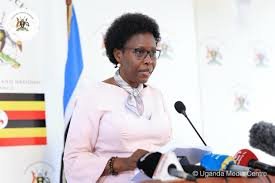
The Minister for Lands, Housing and Urban Development Judith Nabakooba while speaking to reporters at Uganda Media Centre said UCMID will br running for a period of six years commencing from 2026/27 financial year and will be rolled out in 10 regional cities, 26 municipalities, and 13 refugee hosting districts.
Nabakooba noted that the program is expected to benefit over 5.6 million people, of these 1.6 million are in refugee areas.
She emphasized the program’s broad reach, noting it is expected to benefit an estimated 5.6 million people, including 1.6 million in refugee-hosting areas.
“The program targets cities and municipalities with the aim of job creation, productivity gains, and economic transformation,” Minister Nabakooba noted.
She further explained, “channeling investments through economic corridors, UCMID will improve access to regional markets, reduce congestion, lower logistics costs, and enable small and medium enterprises to thrive particularly those employing youth and women.”
The cities to benefit from the program include; Lira, Arua, Gulu, Soroti, Mbale, Hoima, Fort Portal, Jinja, Mbarara, and Masaka. Municipalities currently under USMID include Busia, Kitgum, Apac, Tororo, Kamuli, Lugazi, Moroto, Kabale, Ntungamo, Mubende, and Kasese, while 15 new municipalities such as Mityana, Bugiri, Rukungiri, Kisoro, and Kapchorwa have joined the program. Refugee-hosting districts include Arua, Terego, Yumbe, Madi-Okollo, Lamwo, Adjumani, Moyo, Obongi, Kiryandongo, Kamwenge, Isingiro, Kikuube, and Kyegegwa.
According to the Minister, the program is planned to create about 20,000 permanent jobs, including 5,000 for refugees and host communities, through market operations, maintenance services, waste management, and logistics.
Expanded urban infrastructure and better market access are projected to reduce business costs, boost demand for labor, and increase household incomes, particularly benefiting women, youth, and low-income groups.
Uganda is rapidly urbanizing, with 27% of the population now living in urban areas, growing at a rate of 5.2% annually.
By 2030, the urban population is projected to increase by 69%, adding an estimated 8.1 million people. Despite hosting only a quarter of the population, urban areas are estimated to generate 70% of the country’s GDP, highlighting the importance of programs such as UCMID in sustaining urban growth.
“Urbanization is a critical enabler of national development,” Minister Nabakooba said. “Programs like UCMID are strategic vehicles to ensure this growth is supported by climate-smart infrastructure, improved service delivery, and job creation.
More than one-third of new jobs in Uganda are being created in cities and towns, and this program will strengthen that trend.”
UCMID’s objectives align with Uganda’s Fourth National Development Plan (NDP IV, 2025/26–2029/30), which sets ambitious targets including achieving higher household incomes, full monetization of the economy, and the creation of 2.5 million new jobThe program also supports Uganda Vision 2040 by institutionalizing reforms that position cities as engines of economic growth, leveraging private sector participation, and building governance systems for continuity and scale.
The program will focus on five key pillars: urban roads and mobility, urban drainage and flood mitigation, nature-based solutions and green infrastructure, sustainable solid waste management, and local economic development with job creation. Implementation will also include recreational and sports facilities to improve urban liveability.
UCMID funds will be allocated to strengthen the capacity of cities, municipalities, refugee-hosting districts, and relevant government ministries.
Progress will be measured by enhanced urban management, access to improved infrastructure and services, and increased employment opportunities.
The Minister also revealed that government will be signing legal agreements with the World Bank and commence the stakeholders sensitization, and procurement of services for project implementation.