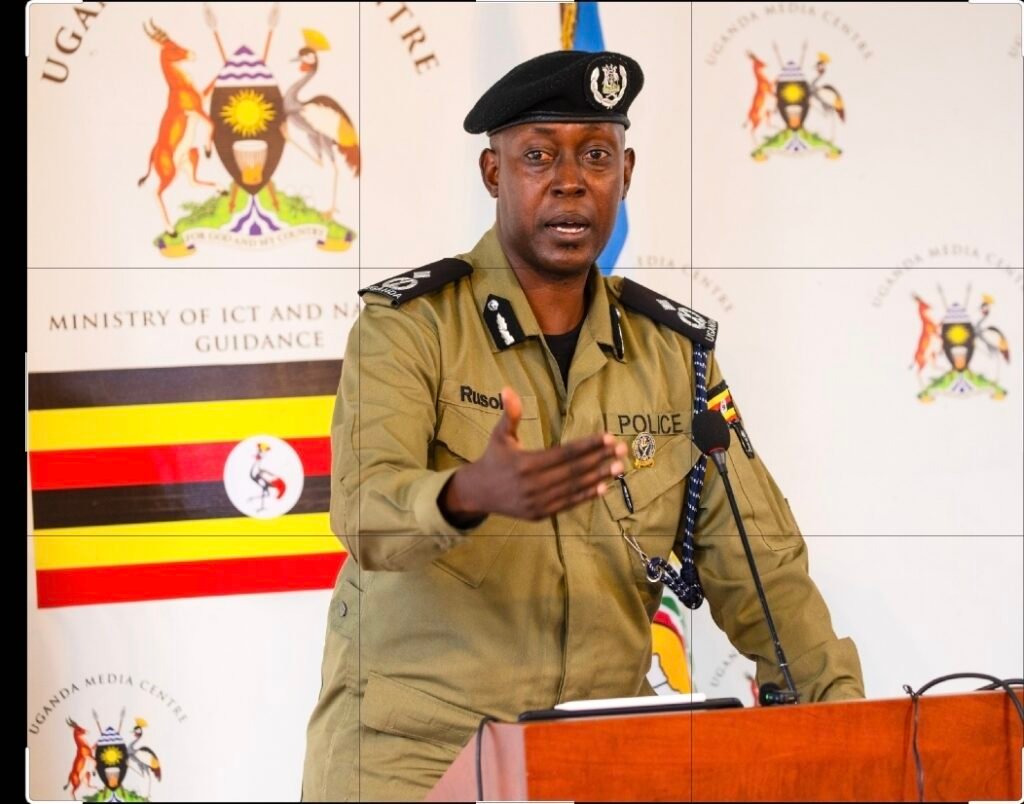
ACP Rusoke Kituuma addressing reporters at Uganda media center
By George Bukenya
The Senior Regional Security Officer will shortly provide detailed information about visa-related fraud. However, it is important to note that visa fraud is part of a broader pattern of general fraud and impersonation offenses that are increasingly being reported in Uganda.
United States of America (USA) Embassy head of security James V. Bloomer has warned Ugandans to stop presenting false documents when applying for Visa to his county.
Bloomer said that since July 2025 43 people have been arrested when they presented fake document such academic papers when applying for USA visa and have been handed to police for prosecution.
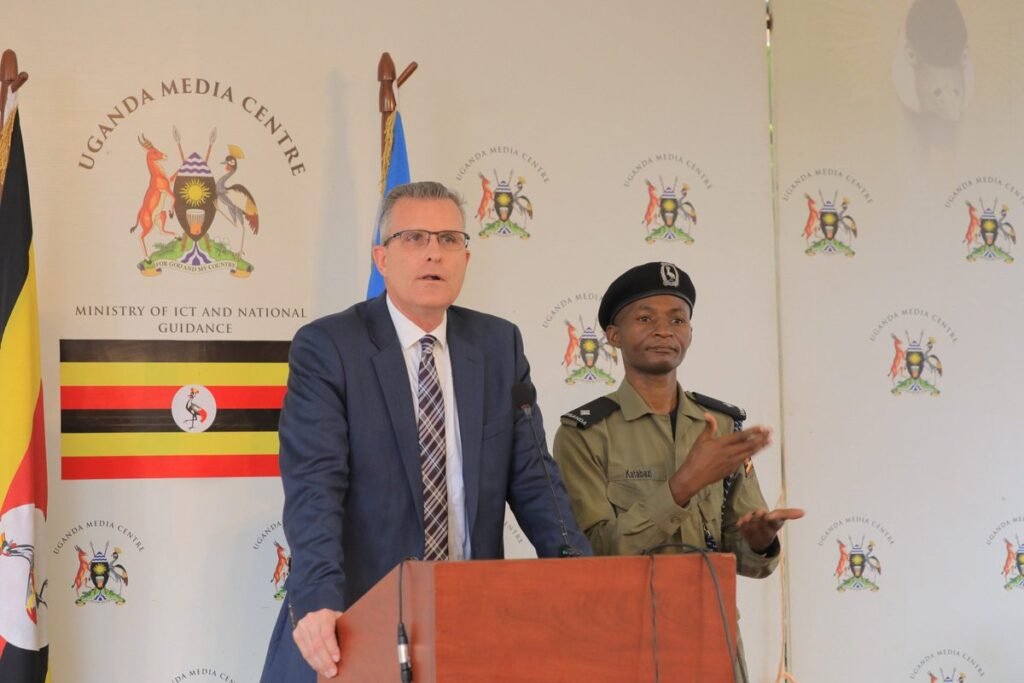
James V. Bloomer head of security at USA Embassy in Uganda speaking to reporters at Uganda Media center
While addressing reporters in a joint press conference with police, Bloomer urged Ugandans applying for USA visa to avoid passing through back door because the Embassy security has what it takes to detect such fraud.
“ There’s no short cut one can pass through while applying for USA visa you just need to apply through the right channel and when our official are satisfied with what you have presented you can get it,’’ Bloomer said.
He also urged applicants not to pay for the visa bond before it’s out because it’s the policy at the Embassy and if one does so then that is considered as fraud.
Uganda Police spokesperson ACP. Rusoke Kituuma, said, many Ugandans are currently grappling with a wave of conmen and impersonators who present themselves as intermediaries or “fixers.” These criminals often pose as officials from government agencies, ministries, NGOs, banks, telecom companies, and other institutions.
According to Rusoke, such fraudsters target people who are unfamiliar with official processes, those in urgent situations and other who are looking for shortcuts as well as such who are desperate for opportunities.
“To appear credible, these criminals use forged identification cards, fake introduction letters, and unofficial phone numbers or social media accounts. In some cases, they even use the names and photographs of real officers or prominent individuals to deceive their victims,’’ Rusoke explained
He further said, “once they receive money, they either disappear completely or continue demanding additional payments, leaving victims embarrassed and afraid to report the matter.’’
“We would like to reassure the public that genuine public officials do not ask for money to perform their lawful duties or to help individual’s access government services.’’
He warned the public to vigilante when someone approaches them privately, asking to keep the matter secret, and demands cash “facilitation” to fix a file, secure a job, process a visa, or obtain a grant, treat this as this is a serious warning sign of fraud.
“Before trusting anyone claiming to represent a government institution or security agency, always verify their identity. Contact the official offices, call known institutional hotlines, visit the nearest police station, or confirm through trusted channels.’’ He warned.
He also warned the public not to send money and or share personal information, he said many victims feel embarrassed and fear being blamed leading to failure by police to net the culprits because the majorities don’t report to police.
The mouth piece of police encouraged anyone who has been defrauded to forward and report the matter. “You are not the criminal; the person who abused your trust is. Your report can help us identify these impostors, protect others, and dismantle the networks behind them.’’
`Our investigators are already handling several cases of impersonation and fraud, and more arrests continue to be made’